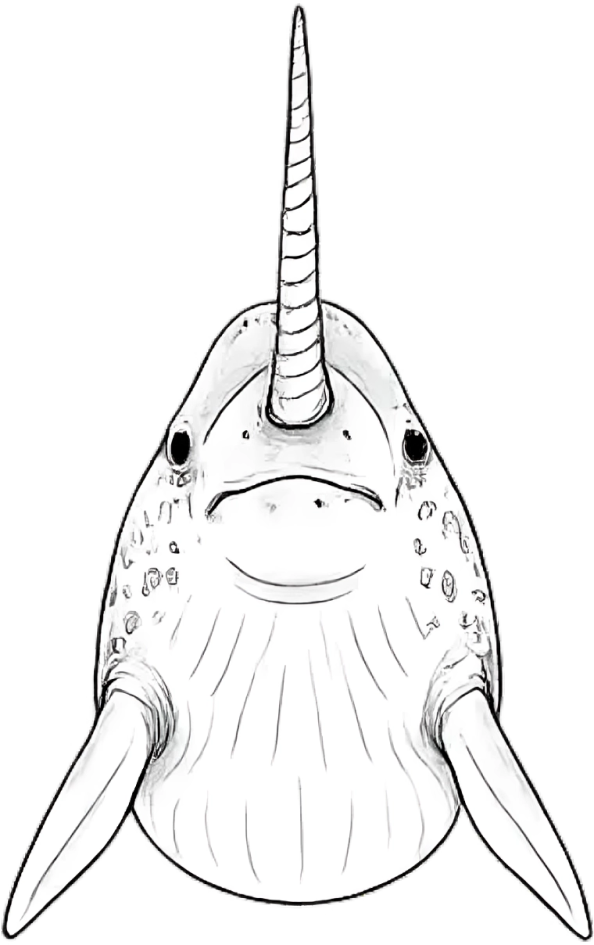
Signature dish: Narwhal
In Greenland, whale hunting remains a vital part of Inuit subsistence culture. While several whale species are harvested under strict quota systems, such as minke and fin whales, narwhal holds a distinct cultural and culinary significance. At Ulo in Ilulissat, it is specifically narwhal mattak that is served, highlighting both tradition and refinement.
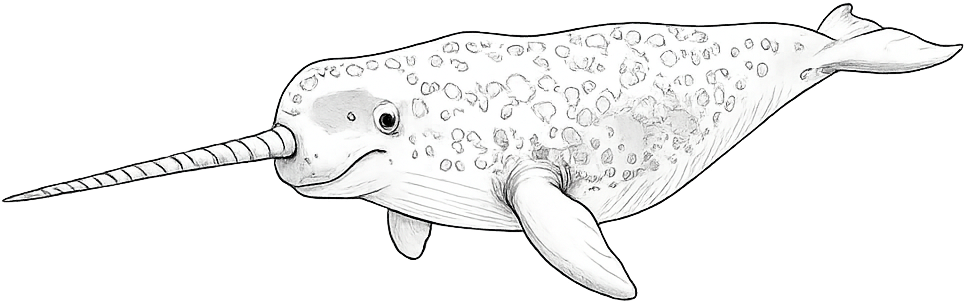
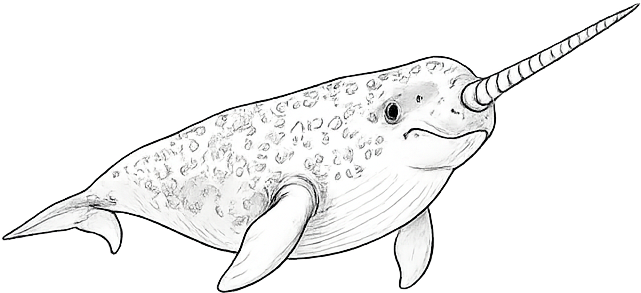
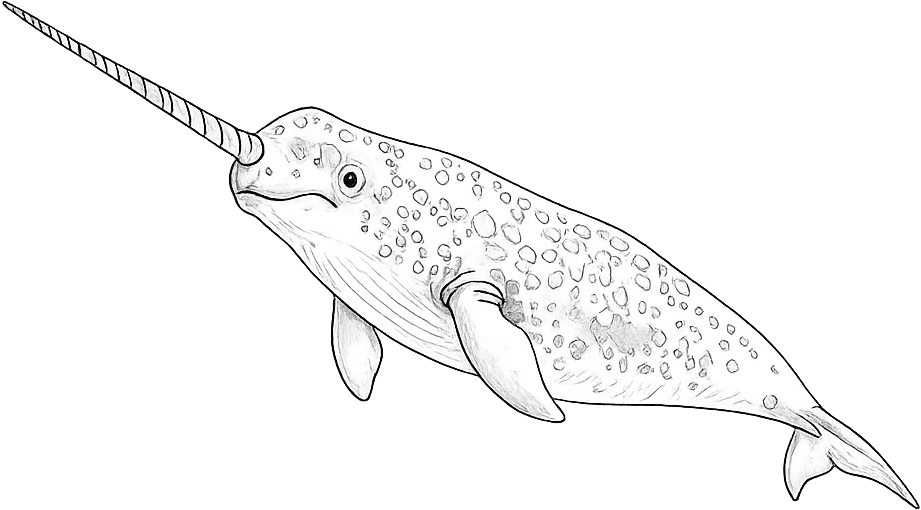
The narwhal (Monodon monoceros), often called the “unicorn of the sea” because of the male’s spiral tusk, inhabits Arctic waters around northern Greenland. Hunting is carefully regulated and based on generations of ecological knowledge. Modern hunters use small motorboats and rifles to ensure a quick, humane kill, but traditional skills, understanding ice movements, migration routes, and weather, remain essential.
Narwhal hunting is community-based and sustainable, guided by quotas set by Greenlandic authorities. The animal is never viewed as a commodity alone, but as a vital source of nourishment and cultural continuity.
the narwhal
Once brought ashore, the narwhal is processed with precision and experience. The mattak, the thick skin and underlying blubber, is carefully separated from the dark red meat beneath. Long, deliberate cuts allow the mattak to be removed in broad strips.
Narwhal mattak is particularly prized for its texture. Compared to baleen whale species, it is often described as more delicate yet firm, with a clean ocean flavor. The outer skin provides resistance, while the blubber layer carries rich natural oils and essential nutrients.
As in traditional Greenlandic practice, almost every part of the animal is used and shared. Respect for the animal is central, and wastefulness is avoided.
From raw tradition to open flame
Historically, mattak has most often been eaten raw, cut into small cubes and consumed plain, allowing its natural oils and subtle marine flavor to stand on their own. This raw preparation reflects centuries of Arctic subsistence, where simplicity preserved both nutrients and authenticity.
Butchering the narwhal
Once brought ashore, the narwhal is processed with precision and experience. The mattak, the thick skin and underlying blubber, is carefully separated from the dark red meat beneath. Long, deliberate cuts allow the mattak to be removed in broad strips.
Narwhal mattak is particularly prized for its texture. Compared to baleen whale species, it is often described as more delicate yet firm, with a clean ocean flavor. The outer skin provides resistance, while the blubber layer carries rich natural oils and essential nutrients.
As in traditional Greenlandic practice, almost every part of the animal is used and shared. Respect for the animal is central, and wastefulness is avoided.
“Grilled mattak whale, marinated to enhance its deep ocean character, kissed by fire and finished with a gentle crunch.A study in contrast, raw tradition and open flame, presented with restraint, letting texture, fat, and smoke unfold.”
This preparation creates a deliberate contrast. The marination subtly amplifies the natural salinity and depth of the narwhal without masking it. The brief contact with open flame introduces smokiness and a delicate crispness to the surface, while preserving the characteristic chew of the skin and the supple richness of the blubber beneath.
Unlike long cooking processes that would render the fat fully, this method respects the structural integrity of mattak. The result is layered: resistance and softness, cool ocean memory and warm smoke, raw heritage and controlled fire.
Differentiation from other whale species
It is important to distinguish narwhal from other whale species used in Greenlandic cuisine. Minke and fin whales are larger baleen whales and are often prepared differently, particularly in relation to their meat. Narwhal mattak, by contrast, is especially valued for its refined texture and distinctive taste.
By serving narwhal mattak in this way, Ulo presents not only an ingredient, but a narrative, one that connects Arctic hunting traditions with modern gastronomy. The dish becomes an exploration of contrast: raw and grilled, ancient and contemporary, ocean and flame.
In doing so, it reflects Greenland itself - rooted in tradition, yet evolving in expression.